Journal Entries
Manual entries, recurring journals, and audit trail.
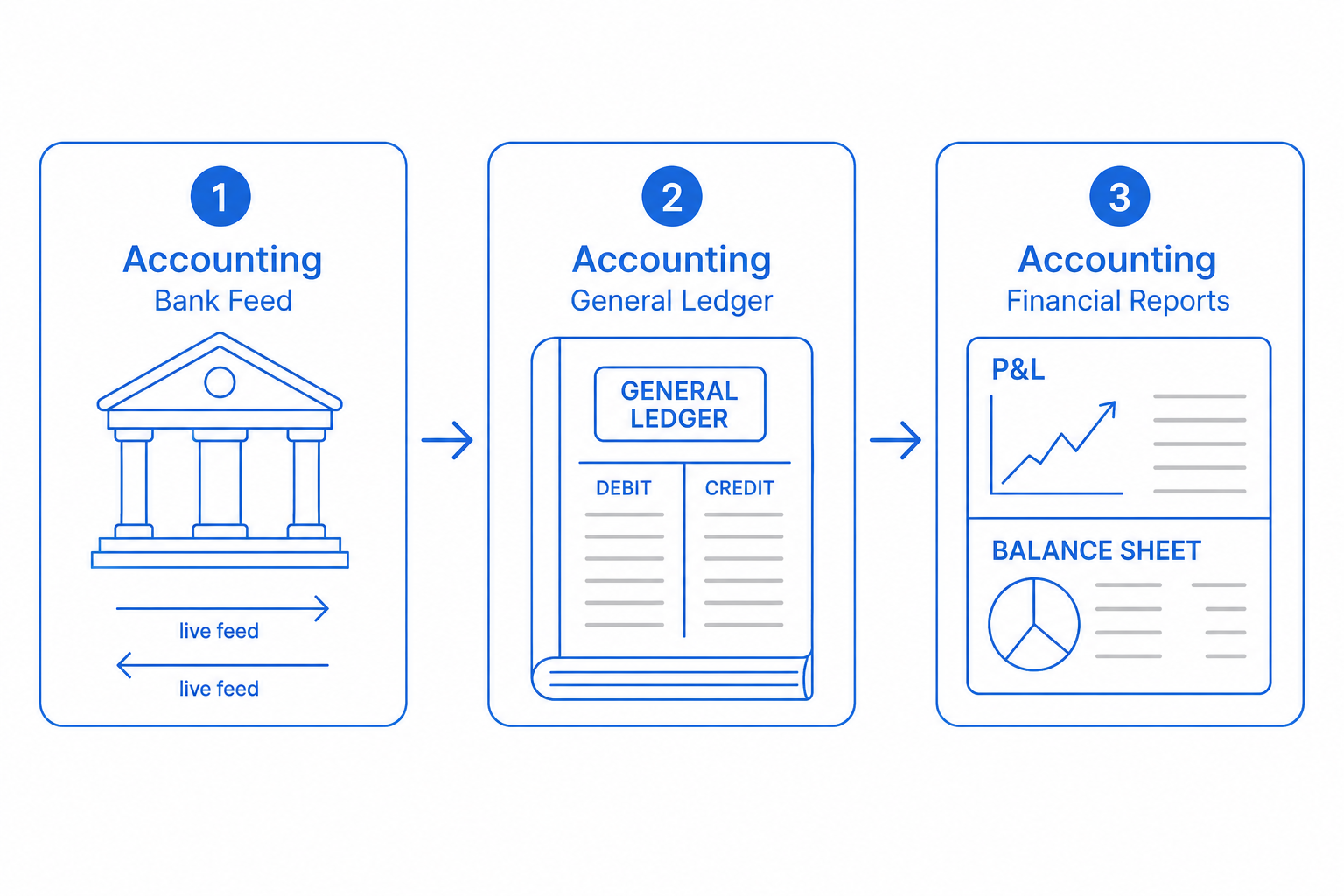
Most accounting platforms hide journal entries behind a wall. The pros — bookkeepers, controllers, accountants — need them at their fingertips.
CloudIP exposes the journal as a first-class object: line-item entry, classes, locations, recurring templates, and a complete audit log of every modification.
Inside Journal Entries
Specifics that distinguish CloudIP Journal Entries from the alternative.
Per-line classes and locations
Segment a single entry across departments and stores without splitting the journal.
Recurring templates
Schedule month-end accruals, depreciation, and prepaid amortization to post automatically.
Audit trail
Every edit logged with user, timestamp, and prior values.
Reverse and re-post
Mistake recovery without surgery on the database.
Journal Entries on the CloudIP platform
Where this capability lives, who runs it, and what it shares with the rest of the system.
Journal Entries runs as part of the CloudIP Accounting module on the same multi-tenant infrastructure as every other capability you use. There is no separate console to log into and no separate billing line: general ledger journal entries is provisioned the moment your tenant is created and stays in lockstep with the rest of the platform as it grows.
Operators interact with general ledger journal entries through the Accounting interface they already know — the same record screens, the same audit trail, the same role and permission model. Behind the scenes, per-line classes and locations handles the heavy lifting, while reverse and re-post keep the experience consistent across teams. Configuration changes are versioned, exportable, and reviewable, so the way you run general ledger journal entries today is reproducible tomorrow.
Because Journal Entries reuses the platform's user database, every action is attributable, every record has a stable ID, and every export honours the tenant's data residency choice. That means general ledger journal entries reports tie out to the rest of the books, audit logs, and operational dashboards without an integration step in between.
Journal Entries fits inside CloudIP Accounting alongside the other accounting capabilities — they share the same data model, so improvements in one tend to compound across the others. If you are evaluating CloudIP specifically for general ledger journal entries, the rest of Accounting comes along at no extra cost.
Common questions about Journal Entries
Yes. The form will not save until debits equal credits. Multi-currency journals balance in each currency and revalue to base at the entry date.
More from Accounting
Branded invoices with online payment, dunning, and partial payments.
Bill entry, approvals, expense receipts, and vendor credits.
Live bank and card feeds with auto-categorization rules.
Match transactions, statements, and books in one view.
GAAP-ready chart with classes, locations, and sub-accounts.
Trade in any currency, revalue at month-end, report in your base.
Try Accounting free for 14 days
See Journal Entries alongside the rest of the platform on real data.