CMO
Email, automation, attribution, and the website — all in your CRM.
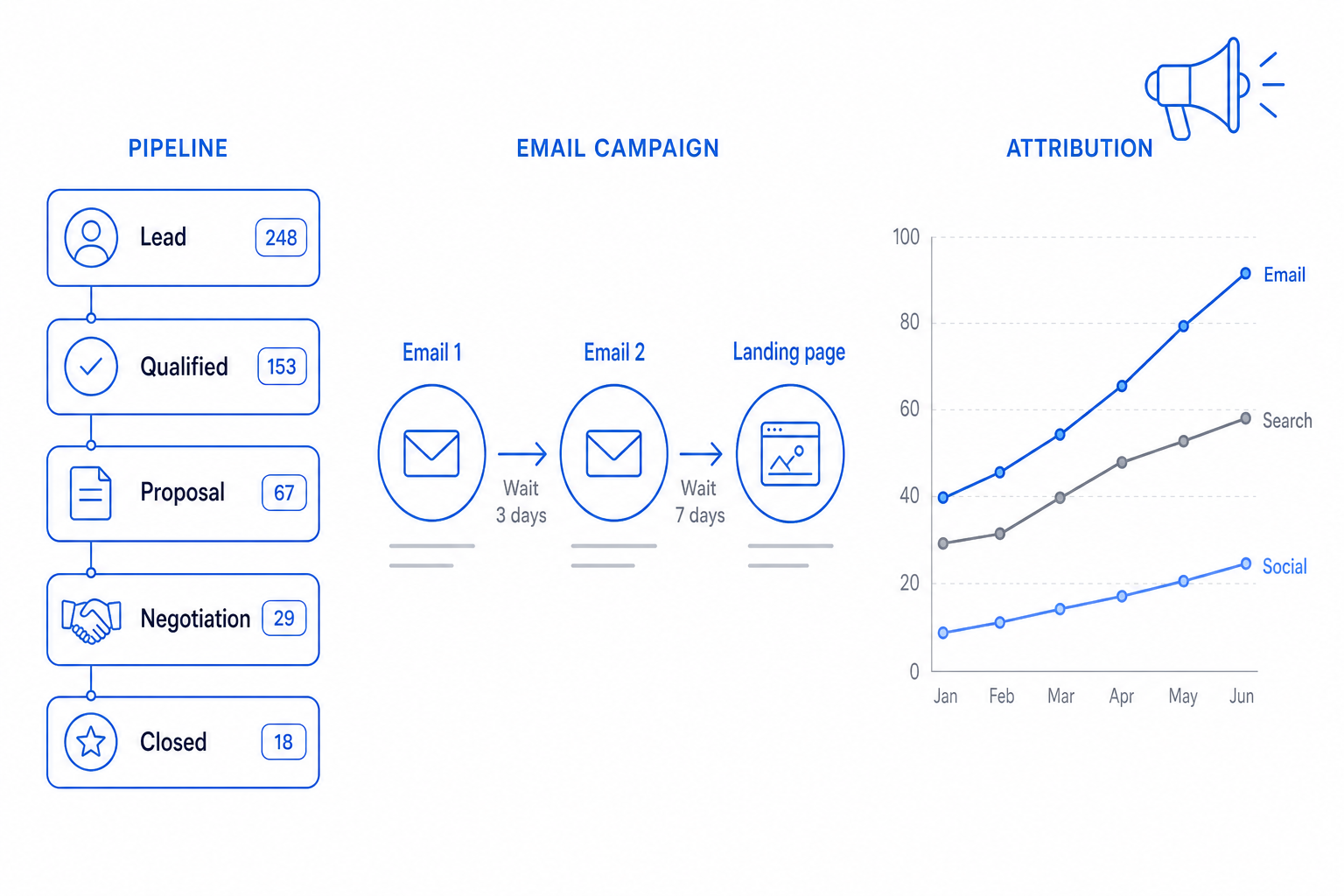
Most SMB marketing leaders run on a stack of point tools. The lead source lives in HubSpot, the email goes through Mailchimp, the website is on WordPress, and the attribution is best-effort. CloudIP keeps marketing on the same database as the CRM and the books.
You answer "did this campaign close any deals" without a BI consultant.
What CMO gets from CloudIP
Source-to-revenue attribution
Track every lead from first-touch source to invoice paid.
Audiences from the CRM
Segments are CRM segments — no list export, no audience drift.
Owned channels in one place
Email, SMS, landing pages, and the website live in one product.
Ad platform sync
Conversion sync writes back closed-won revenue to Google and Meta.
How CloudIP shows up for CMO
A practical walkthrough of what changes when this audience runs on the platform.
What changes for a CMO on CloudIP is that the questions you ask every week have a single source. The number on the dashboard is the same number that appears on the report, the export, and the API. source-to-revenue attribution stops being a debate and starts being a fact.
That single source matters more for a CMO than for a generic user, because the role's leverage comes from confidence. With CMO marketing platform consolidated into one platform, the CMO spends less time reconciling and more time deciding — which is the actual job.
In practice, CMOs using CloudIP report the same pattern: fewer tools, fewer logins, fewer status meetings. The platform absorbs the routine work that used to be five vendor relationships and surfaces only the data that requires judgment.
Common questions from CMO buyers
Yes. CMO marketing platform is one of the named buyer profiles the platform is designed around. Source-to-revenue attribution and Audiences from the CRM that matter most for CMO are part of the standard subscription rather than a tier upgrade.
Modules to start with
Try CloudIP for CMO
14-day free trial with every module enabled. We'll help you import from your current tools.