Cloud PBX
Business phone system with extensions, hunt groups, and call routing.
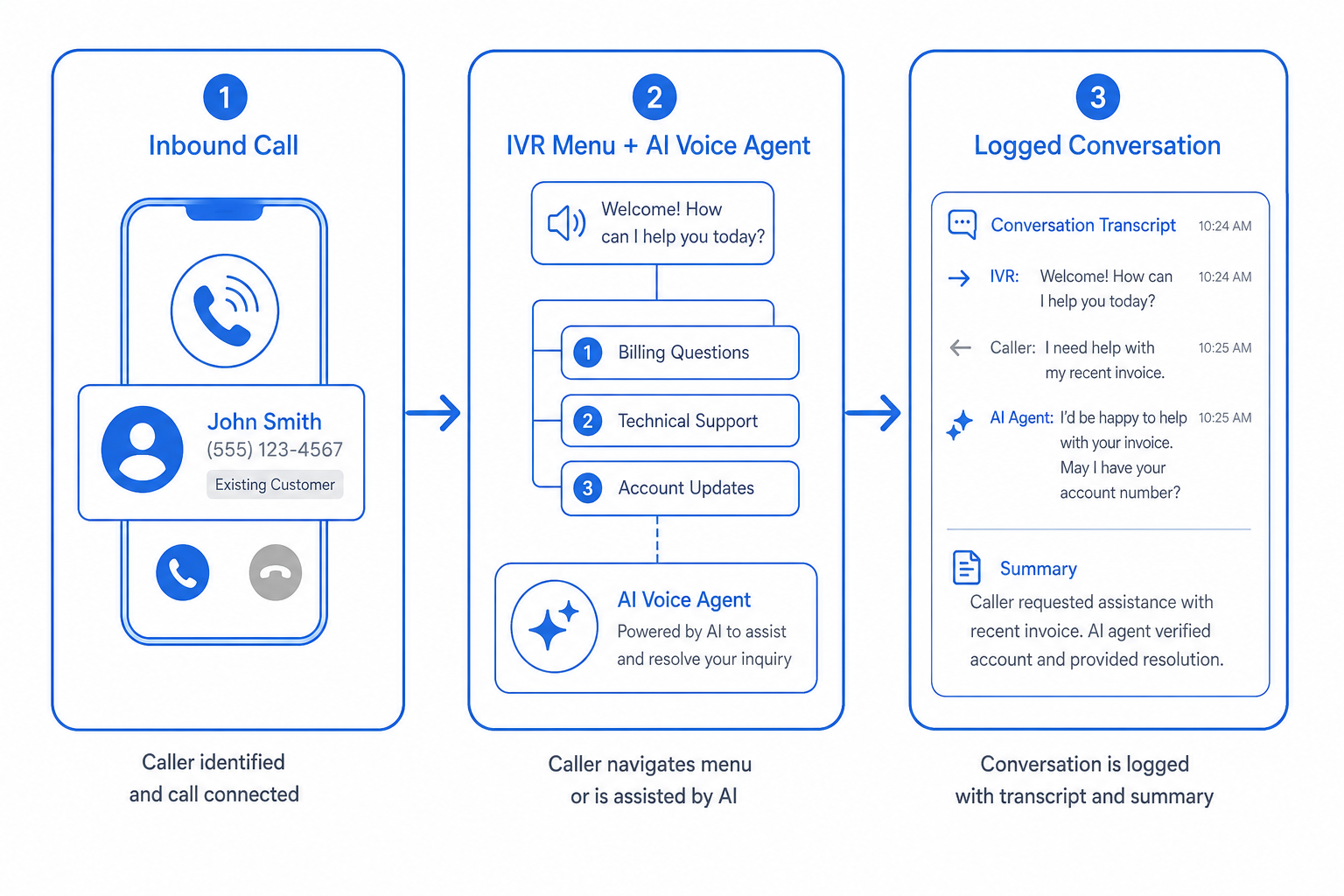
A cloud PBX is the modern equivalent of the on-premises phone system that used to live in a closet. CloudIP cloud PBX gives every employee an extension, every department a queue, and every call a recording — without an appliance to maintain.
Port existing numbers, bring your own SIP trunk for negotiated minutes, or buy directly through us.
Inside Cloud PBX
Specifics that distinguish CloudIP Cloud PBX from the alternative.
Extensions and routing
Per-employee extensions, department hunt groups, and time-of-day routing.
IVR and queues
Visual IVR builder; queues with hold music, callback, and skip-the-line VIP rules.
Porting and BYOC
Port your numbers; bring your own carrier for negotiated rates.
Call recording
Record on demand or always; retention policies enforced at the storage layer.
Cloud PBX on the CloudIP platform
Where this capability lives, who runs it, and what it shares with the rest of the system.
Cloud PBX runs as part of the CloudIP Communications & UCaaS module on the same multi-tenant infrastructure as every other capability you use. There is no separate console to log into and no separate billing line: cloud PBX is provisioned the moment your tenant is created and stays in lockstep with the rest of the platform as it grows.
Operators interact with cloud PBX through the Communications & UCaaS interface they already know — the same record screens, the same audit trail, the same role and permission model. Behind the scenes, extensions and routing handles the heavy lifting, while call recording keep the experience consistent across teams. Configuration changes are versioned, exportable, and reviewable, so the way you run cloud PBX today is reproducible tomorrow.
Because Cloud PBX reuses the platform's user database, every action is attributable, every record has a stable ID, and every export honours the tenant's data residency choice. That means cloud PBX reports tie out to the rest of the books, audit logs, and operational dashboards without an integration step in between.
Cloud PBX fits inside CloudIP Communications & UCaaS alongside the other communications & ucaas capabilities — they share the same data model, so improvements in one tend to compound across the others. If you are evaluating CloudIP specifically for cloud PBX, the rest of Communications & UCaaS comes along at no extra cost.
Common questions about Cloud PBX
Yes. Numbers port in from any US carrier with a typical 5–10 business-day window for local numbers and 1–2 days for toll-free. During the port, both systems can ring in parallel so no calls are missed.
More from Communications & UCaaS
Inbound and outbound contact center with queues, ACD, and wallboards.
Visual voicemail, AI transcription, and routing to email or CRM.
AI receptionist that answers, qualifies, and books — 24/7.
Visual phone-tree builder with conditions and CRM lookups.
HD video, screen share, recording, and AI summaries.
Registration pages, large-audience streaming, polls, Q&A, and replay.
Try Communications & UCaaS free for 14 days
See Cloud PBX alongside the rest of the platform on real data.