Ransomware Recovery
Roll back to a clean point-in-time after an attack — in minutes.
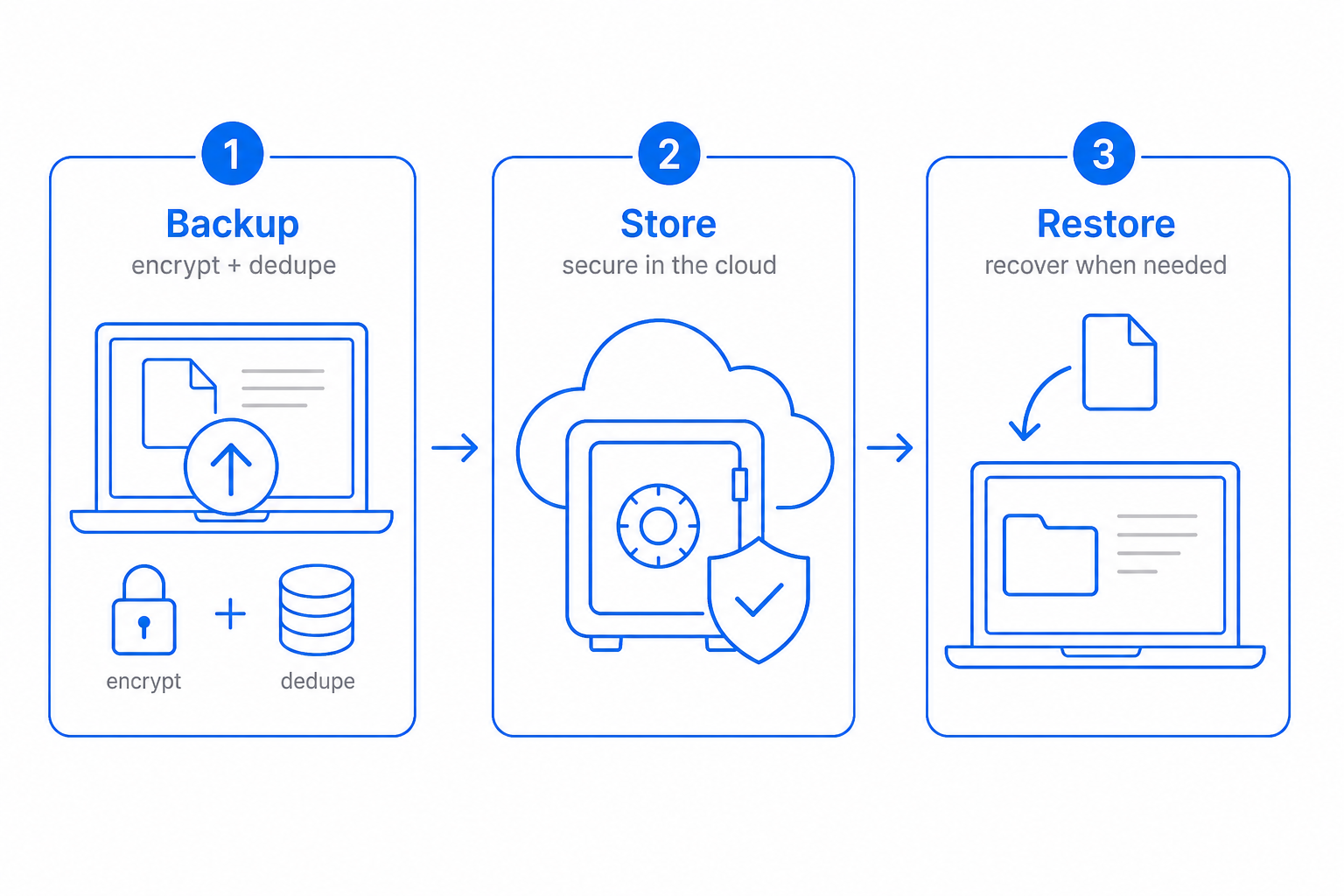
Ransomware is mostly a backup problem. If your backups can be deleted by the same admin account that the attacker compromised, you do not have ransomware recovery — you have a coin flip.
CloudIP combines behavioral detection (in the Cybersecurity module) with immutable snapshot chains (in the Backup module). When mass encryption is detected, the host is isolated and the latest clean snapshot is one click away.
Inside Ransomware Recovery
Specifics that distinguish CloudIP Ransomware Recovery from the alternative.
Immutable snapshot chains
Retention locks prevent deletion before the configured window expires — even by an authorized admin.
Behavioral detection of encryption
Endpoint protection identifies mass-write patterns characteristic of ransomware.
Automatic host isolation
A flagged endpoint is cut from network traffic until reviewed.
Snapshot rollback
Restore the last clean point and bring the host back online without paying anyone.
Ransomware Recovery on the CloudIP platform
Where this capability lives, who runs it, and what it shares with the rest of the system.
Ransomware Recovery runs as part of the CloudIP Backup & Recovery module on the same multi-tenant infrastructure as every other capability you use. There is no separate console to log into and no separate billing line: ransomware recovery is provisioned the moment your tenant is created and stays in lockstep with the rest of the platform as it grows.
Operators interact with ransomware recovery through the Backup & Recovery interface they already know — the same record screens, the same audit trail, the same role and permission model. Behind the scenes, immutable snapshot chains handles the heavy lifting, while snapshot rollback keep the experience consistent across teams. Configuration changes are versioned, exportable, and reviewable, so the way you run ransomware recovery today is reproducible tomorrow.
Because Ransomware Recovery reuses the platform's user database, every action is attributable, every record has a stable ID, and every export honours the tenant's data residency choice. That means ransomware recovery reports tie out to the rest of the books, audit logs, and operational dashboards without an integration step in between.
Ransomware Recovery fits inside CloudIP Backup & Recovery alongside the other backup & recovery capabilities — they share the same data model, so improvements in one tend to compound across the others. If you are evaluating CloudIP specifically for ransomware recovery, the rest of Backup & Recovery comes along at no extra cost.
Common questions about Ransomware Recovery
No. Backups land on immutable snapshots that no admin or attacker can shorten or delete before the retention window expires. Even a credential-compromised admin cannot reduce the snapshot lifetime; the rule is enforced server-side.
More from Backup & Recovery
Continuous offsite protection for files, folders, and shares.
Full-system protection for Windows Server, Linux, and virtualization hosts.
Laptop and desktop protection that survives lost or stolen devices.
Restore an entire machine to identical or replacement hardware.
Tamper-proof restore points that no admin (or attacker) can delete early.
Copies of your data live across seven US regions, automatically.
Try Backup & Recovery free for 14 days
See Ransomware Recovery alongside the rest of the platform on real data.