ShipEngine integration
Live rates, labels, tracking, and address validation.
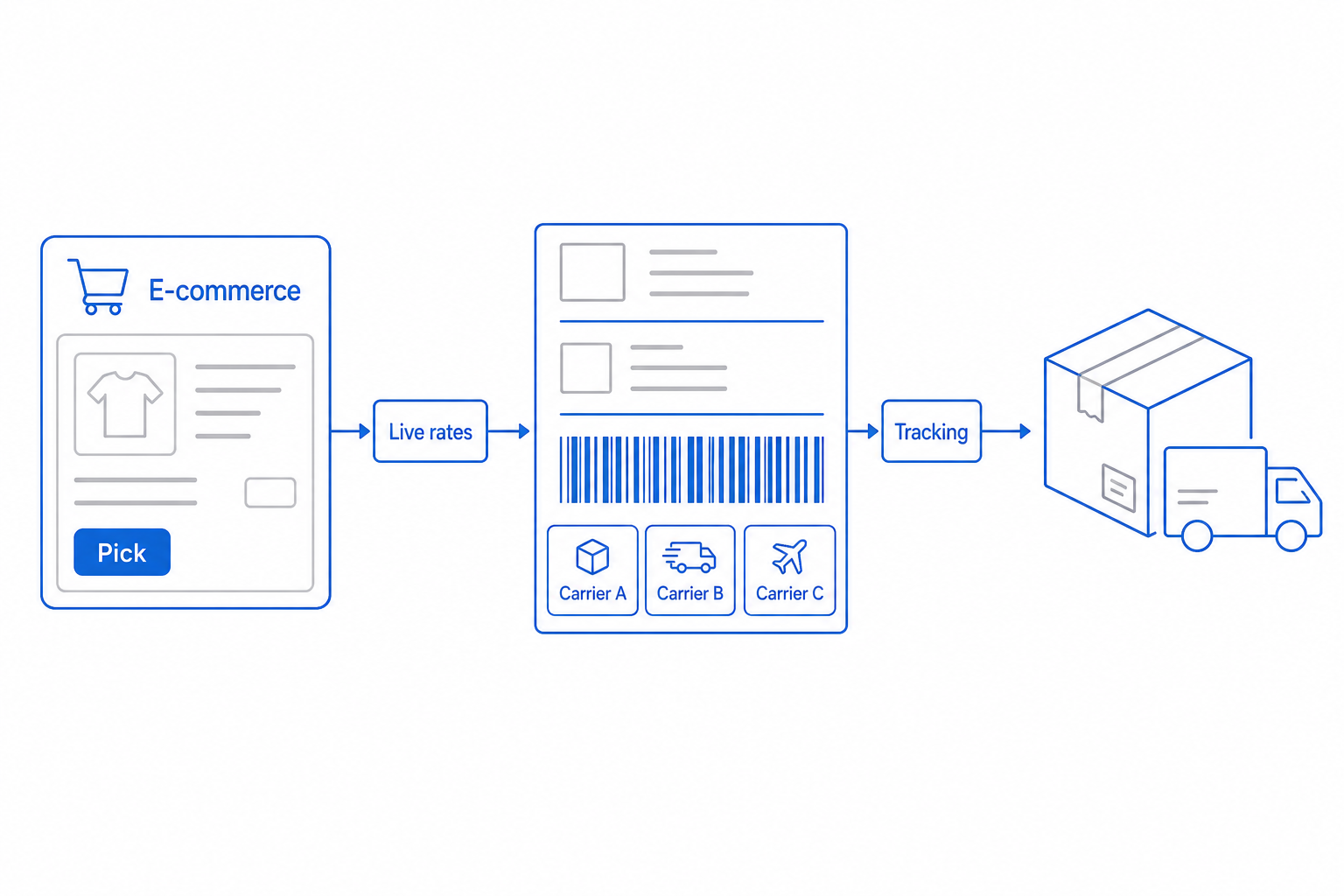
How ShipEngine fits in CloudIP
- Provides live carrier rates from UPS, FedEx, USPS, and DHL.
- Generates shipping labels, tracks shipments, and validates addresses.
- Returns shipment cost details for accurate cost-of-goods reporting.
Why this integration exists
ShipEngine aggregates the major US carriers behind one API, and is what the e-commerce module uses for fulfillment.
Configuration notes
- Bring-your-own carrier accounts supported to keep negotiated rates.
- Address validation is enabled by default to reduce delivery failures.
How the ShipEngine integration runs in production
The ShipEngine integration is part of the standard CloudIP subscription — it is not a partner-tier add-on or a separate billing line. Authentication, rate limiting, and error handling are managed inside the platform, and any change in the ShipEngine state of the world propagates to the relevant CloudIP module without operator intervention.
For most customers, the integration is invisible after the initial connection: records appear in the shipping module they belong to, and downstream workflows — reports, audit trail, exports — see the same data the rest of the platform sees. The integration honours the tenant.dataResidency choice you make at provisioning, so ShipEngine traffic respects the same boundary as your own records.
If you eventually outgrow the ShipEngine integration, the data it touches stays inside CloudIP — the integration is a connector, not a system of record. That means swapping ShipEngine for an alternative does not require a data migration; it requires reconnecting the source.
Common questions about the ShipEngine integration
Yes. The ShipEngine integration is part of the platform; there is no per-integration fee or premium tier required to use it. You bring your own ShipEngine account where applicable, and CloudIP handles the connection.
Start free for 14 days
See how CloudIP and its integrations work together on real data.