Multi-location
Per-location reporting, transfers, and multi-store POS.
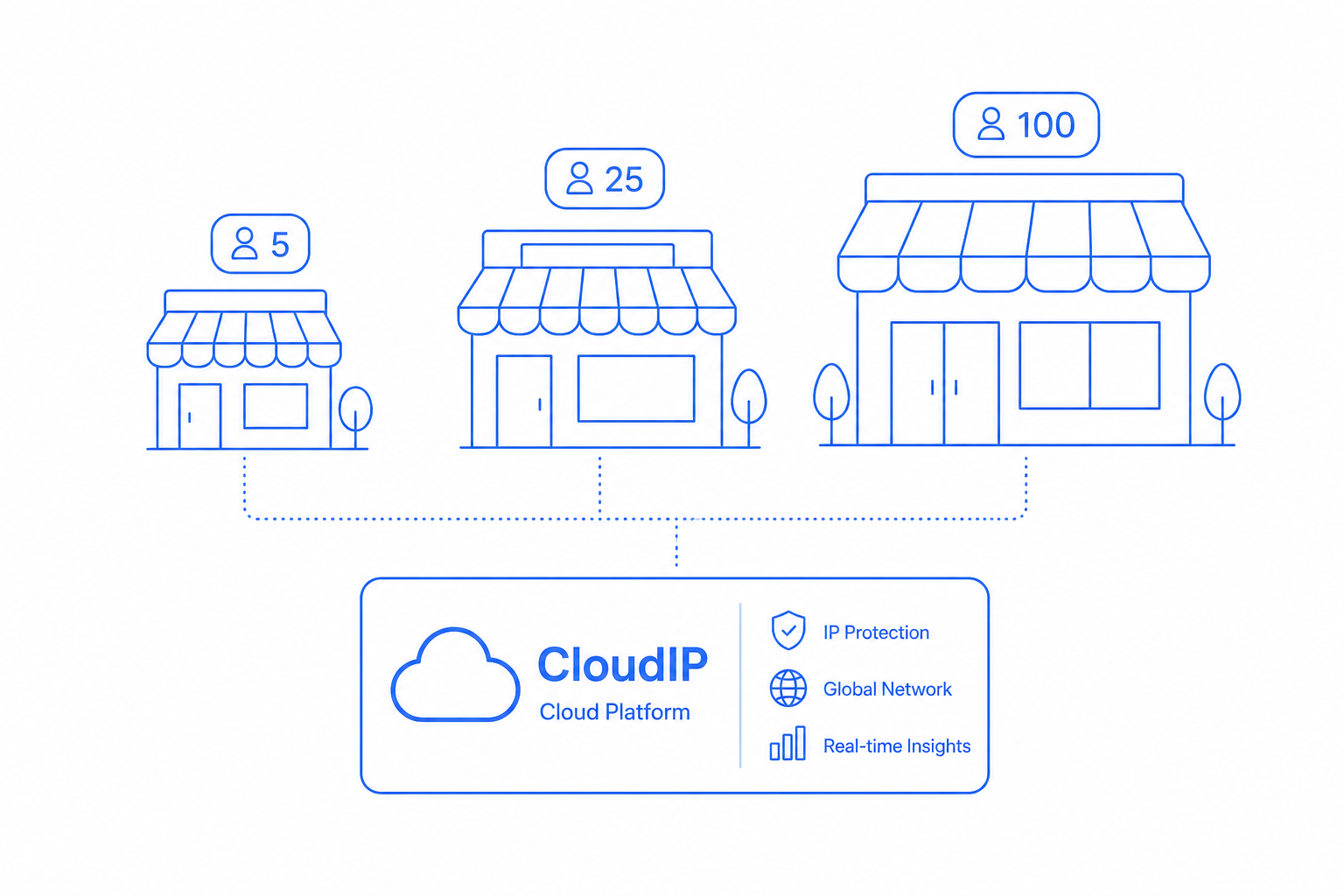
Multi-location SMBs run on the assumption that what is shared should be central and what is local should be local. CloudIP's POS, e-commerce, and accounting modules have first-class location concepts, so the chain is not a spreadsheet exercise.
Reporting drills from chain to store and back.
What Multi-location gets from CloudIP
Central catalog
One product database with per-location overrides.
Inter-store transfers
Move stock between sites with proper documentation.
Per-location P&L
Class and location segmentation across reports.
Consolidated payroll
One pay run across all locations with per-site allocations.
How CloudIP shows up for Multi-location
A practical walkthrough of what changes when this audience runs on the platform.
Multi-location businesses run differently from the next size up or down. CloudIP's pricing and configuration acknowledge that: a Multi-location team gets the same modules, the same uptime SLA, and the same security defaults as a much larger customer, with onboarding and support sized for the team that actually exists.
Because multi-location business platform is delivered as one subscription, Multi-location businesses avoid the per-seat-per-tool sprawl that punishes growth. Central catalog compounds: every additional employee is one user record and one permission set, not twelve.
Companies in this range tend to graduate into more advanced workflows — approval routing, multi-location accounting, advanced HR — without changing platforms. CloudIP scales on the same data model, so growth is configuration, not migration.
Common questions from Multi-location buyers
Yes. multi-location business platform is one of the named buyer profiles the platform is designed around. Central catalog and Inter-store transfers that matter most for Multi-location are part of the standard subscription rather than a tier upgrade.
Modules to start with
Retail, restaurant, and service POS with inventory, payments, and the hardware to run it.
Sell online and in-store with one inventory, dynamic pricing, and pick-pack-ship built in.
Double-entry bookkeeping, banking, and reports — built like QuickBooks, priced like a feature.
Try CloudIP for Multi-location
14-day free trial with every module enabled. We'll help you import from your current tools.