Kubernetes
Kubernetes PVC backup via operator and sidecar patterns.
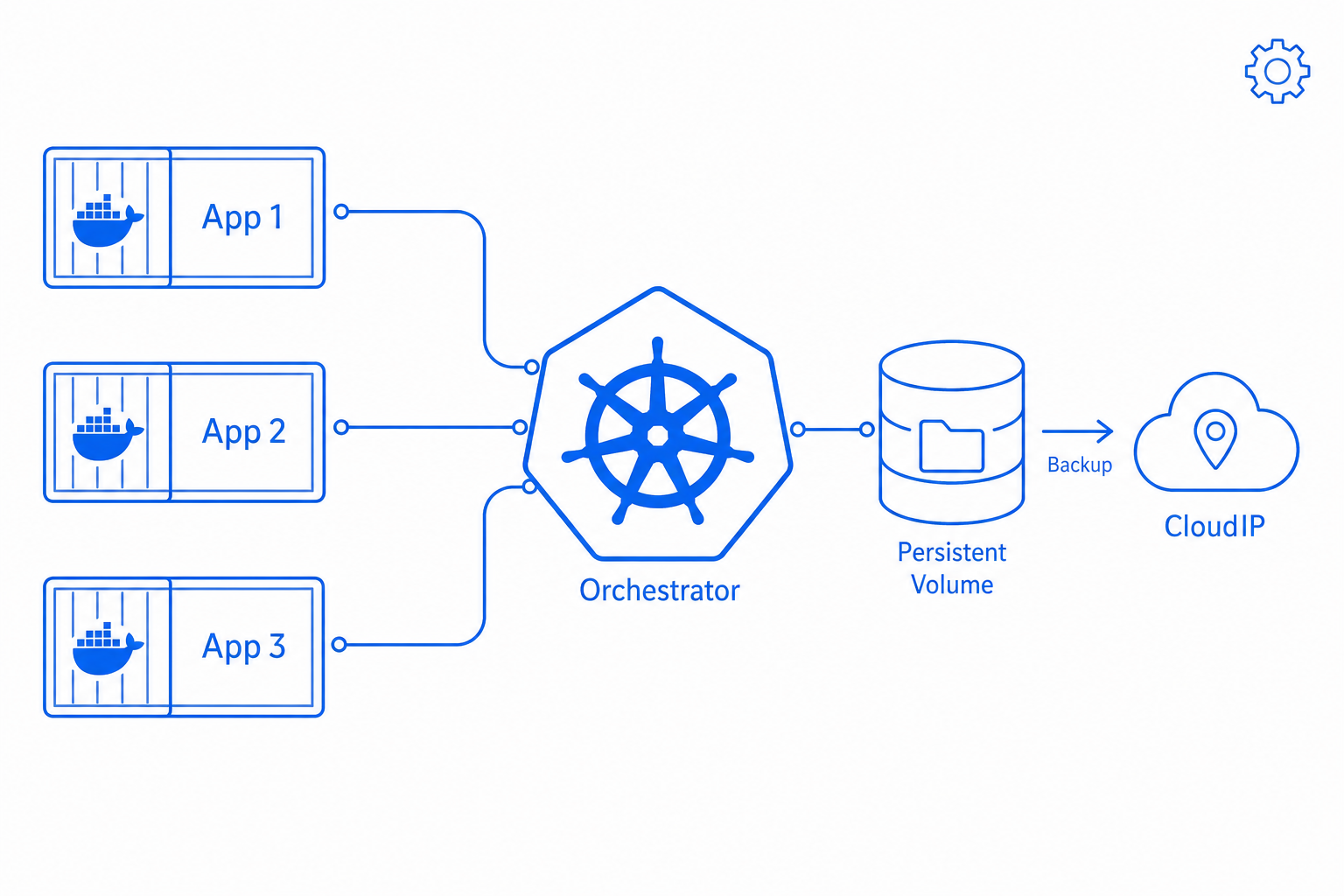
Kubernetes backup is harder than VM backup because state lives in many small PVCs. CloudIP supports two patterns: an operator that runs cluster-wide and reads PV claims, or sidecars added to specific stateful workloads.
Both patterns produce restic-compatible backups.
What Kubernetes gets from CloudIP
Operator
Cluster-wide operator with namespace and label selectors.
Sidecar
Per-workload sidecar for fine-grained control.
CSI snapshots
Uses CSI snapshot capability where the storage driver supports it.
Backup CRD
Backup configuration as Kubernetes resources for GitOps workflows.
How CloudIP shows up for Kubernetes
A practical walkthrough of what changes when this audience runs on the platform.
If you are evaluating CloudIP because of Kubernetes, you are likely already running a stack that integrates around it. CloudIP is built to be a friendly neighbour to Kubernetes rather than a replacement: where Kubernetes is the system of record, CloudIP defers; where CloudIP owns the operational record, Kubernetes reads from a documented endpoint.
The most common pattern is a thin integration with Kubernetes for the parts of the business it already runs, and CloudIP for everything else — accounting, CRM, HR, communications, POS, and backup. Operator is what makes that practical at SMB scale.
Because the platform exposes REST endpoints and webhooks for every meaningful state change, the integration with Kubernetes stays under your control. There is no special partner program, no hidden surcharge, and no implementation gating — the same automation primitives are available to every customer on day one.
Common questions from Kubernetes buyers
Yes. Kubernetes backup is one of the named buyer profiles the platform is designed around. Operator and Sidecar that matter most for Kubernetes are part of the standard subscription rather than a tier upgrade.
Try CloudIP for Kubernetes
14-day free trial with every module enabled. We'll help you import from your current tools.